
A hobby + an idea + AI = vibecoding a business
SNAPE Audio Plugin Suite
SNAPE Audio is a audio plugin business built from the ground up, 16 LFO-driven effects designed to add movement to static mixes. I used AI-assisted development to compress a multi-year product roadmap into 3 weeks, So I was focused on the UX/UI, DSP parameters, brand identity, product strategy, and go-to-market planning.
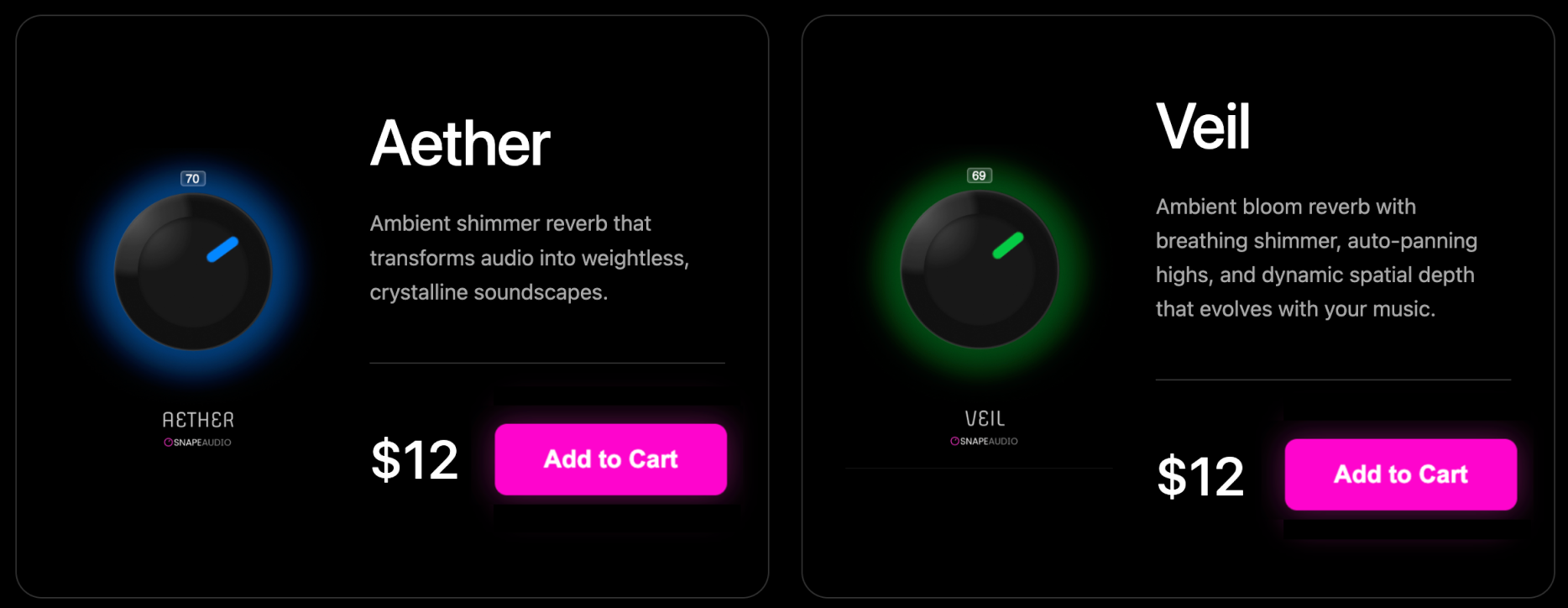
Product website
SNAPE Audio is a audio plugin business built from the ground up, 16 LFO-driven effects designed to add movement to static mixes. I used AI-assisted development to compress a multi-year product roadmap into 3 weeks, So I was focused on the UX/UI, DSP parameters, brand identity, product strategy, and go-to-market planning.
Product website
 My Role - Developer, Designer, Product Strategist
_ Identified a market gap in the crowded audio plugin space and defined a clear product positioning
_ Developed 20 production-ready plugins and synths using JUCE 8 framework with AI-assisted C++ development
_ Created complete brand identity including logo system, color palette, and UI design language
_ Built comprehensive product strategy with pricing architecture, bundle structure, and revenue modeling
_ Designed and developed full e-commerce website with legal compliance (GDPR/CCPA, EULA) Impact
Created a complete, market-ready plugin business with revenue projections of $18K-73K annually. The AI-assisted development workflow compressed what would typically be 1-2 years of development into 3 weeks, demonstrating how AI can accelerate technical product delivery without sacrificing quality or depth. The Approach
_ Find the underserved niche: simple, focused LFO effects vs. complex feature-heavy competitors
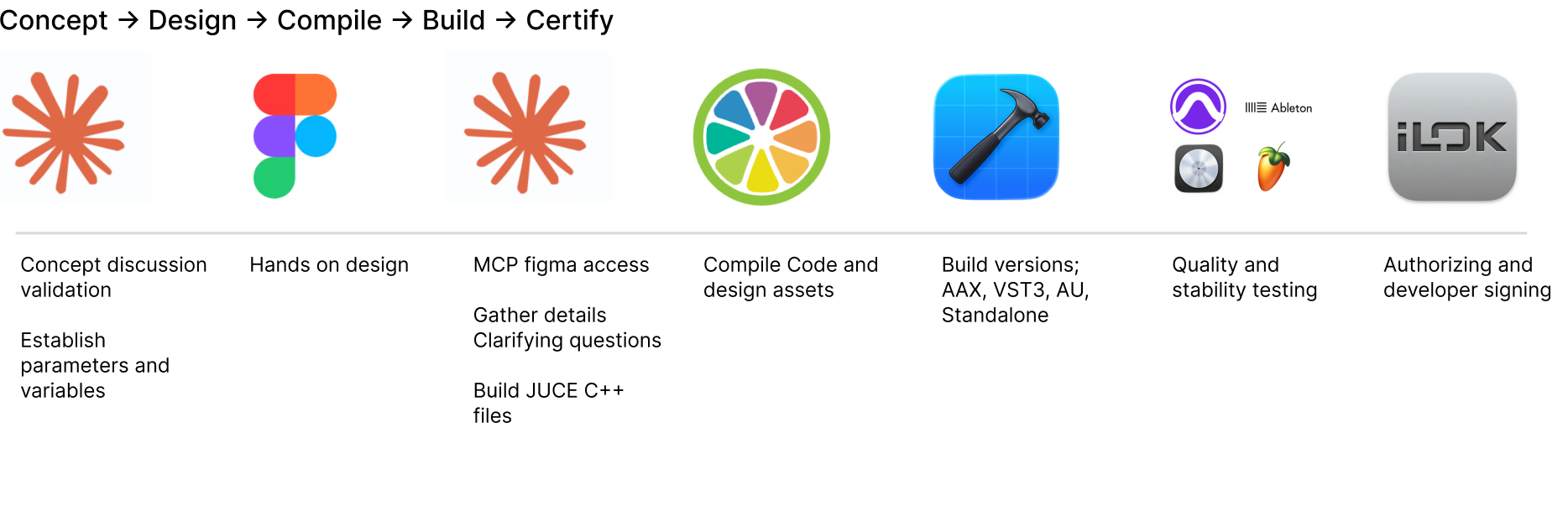
_ I used AI to code the DSP while I focused on the concepts, parameters, UX/UI and audits
_ Design a product family that makes business sense — three tiers, strategic pricing, clear upgrade paths
_ Build for real-world constraints: AU stability issues, iLok integration, Projucer workflows
Finding the gap in a saturated market
The audio plugin market is flooded tools packed with features most people never use. I identified a clear opportunity: producers want movement in their mixes, but they don't want to spend 20 minutes programming automation curves. The solution was LFO-driven effects that do one thing exceptionally well — add automated movement without the complexity.
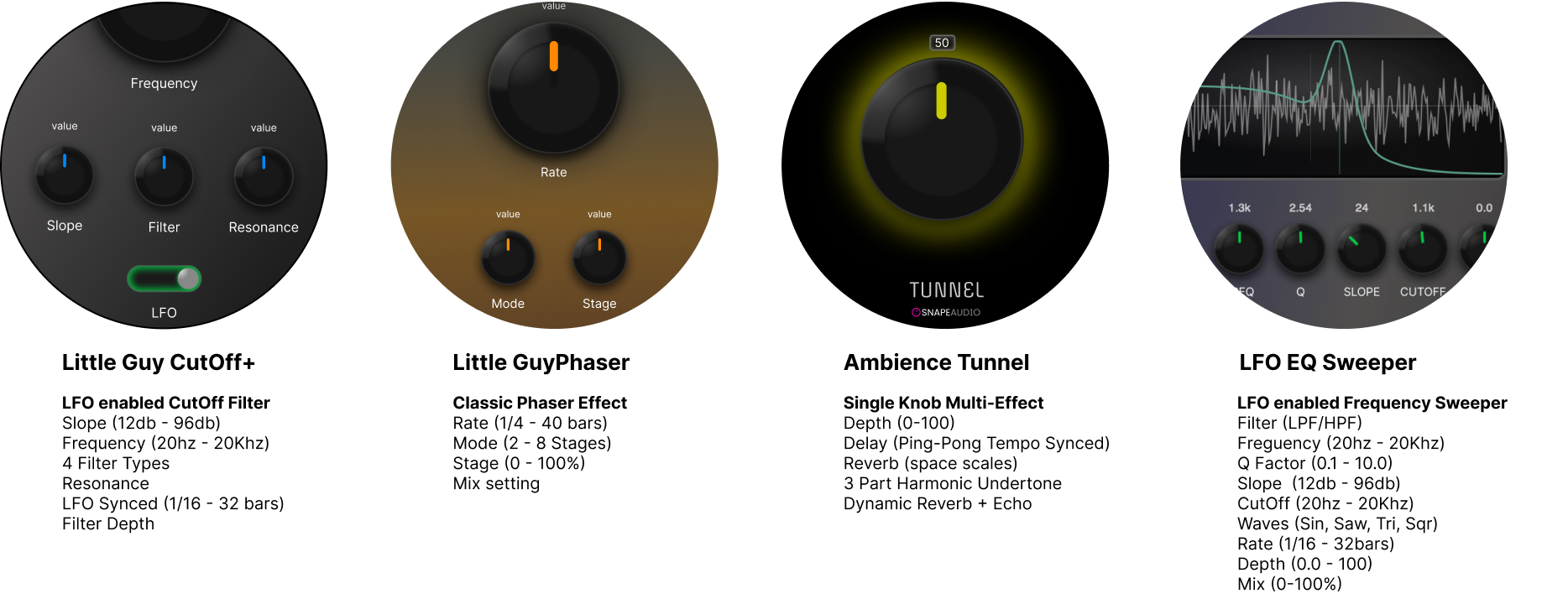
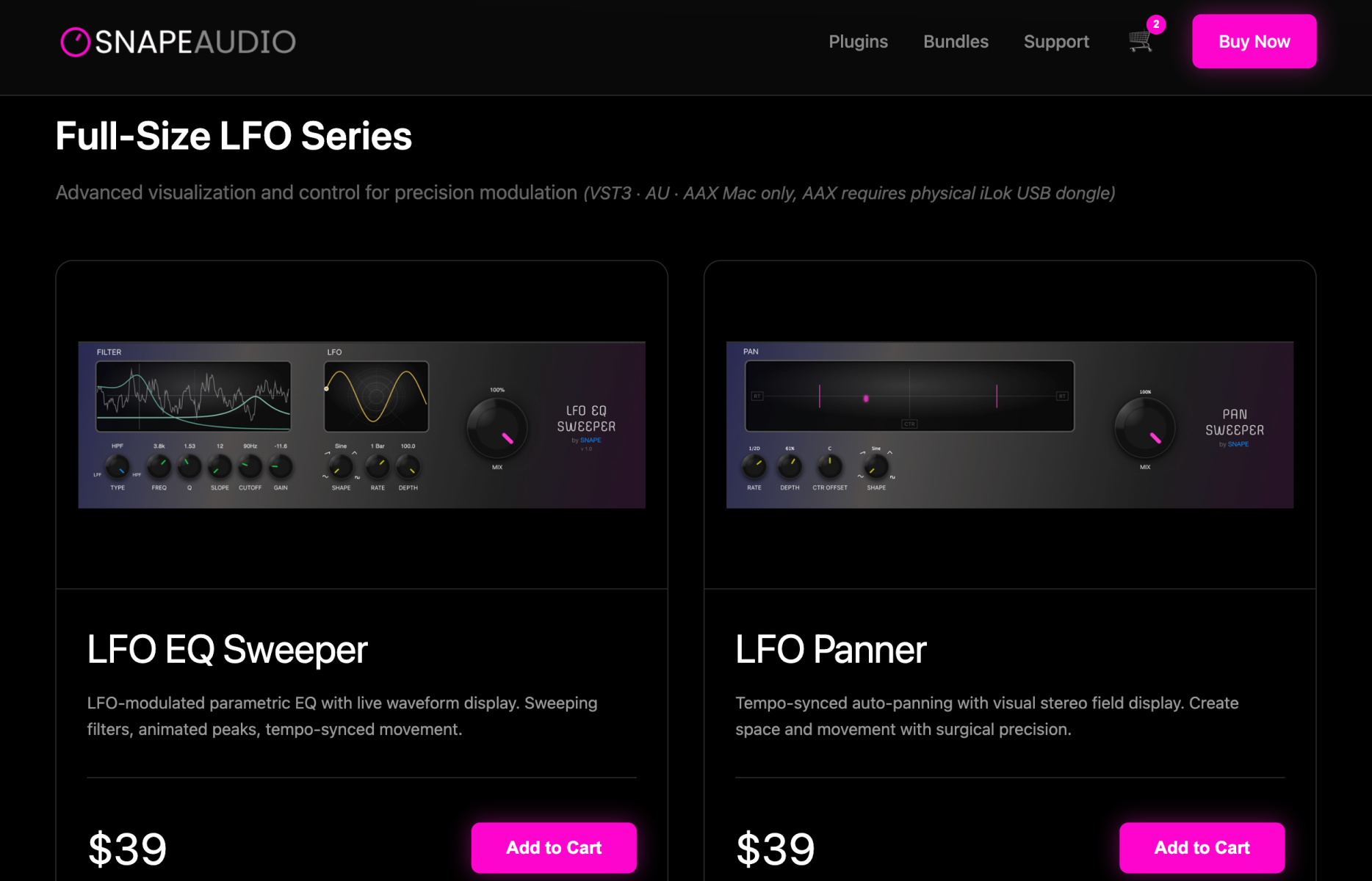
Product architecture that makes business senseI organized 16 plugins into three strategic families: Little Guy Modern, Little Guy Classics, and Full-Size LFO. The pricing strategy uses anchoring psychology — the $149 Complete Collection makes $59 bundles feel like a deal, driving higher average order values. Every product tier has a clear upgrade path. AI-assisted development without losing control
AI compressed the development timeline dramatically, but not by writing the code for me. Instead, I used it as a pair programmer — handling boilerplate JUCE setup, generating complex DSP algorithms (cascaded Butterworth filters, State-Variable TPT filters), and debugging AU-specific crashes that would have taken days to isolate. The critical architectural decisions, UI design, and DSP tuning were still mine. AI accelerated execution without sacrificing depth or quality.
 Designing a consistent visual language across 16 plugins
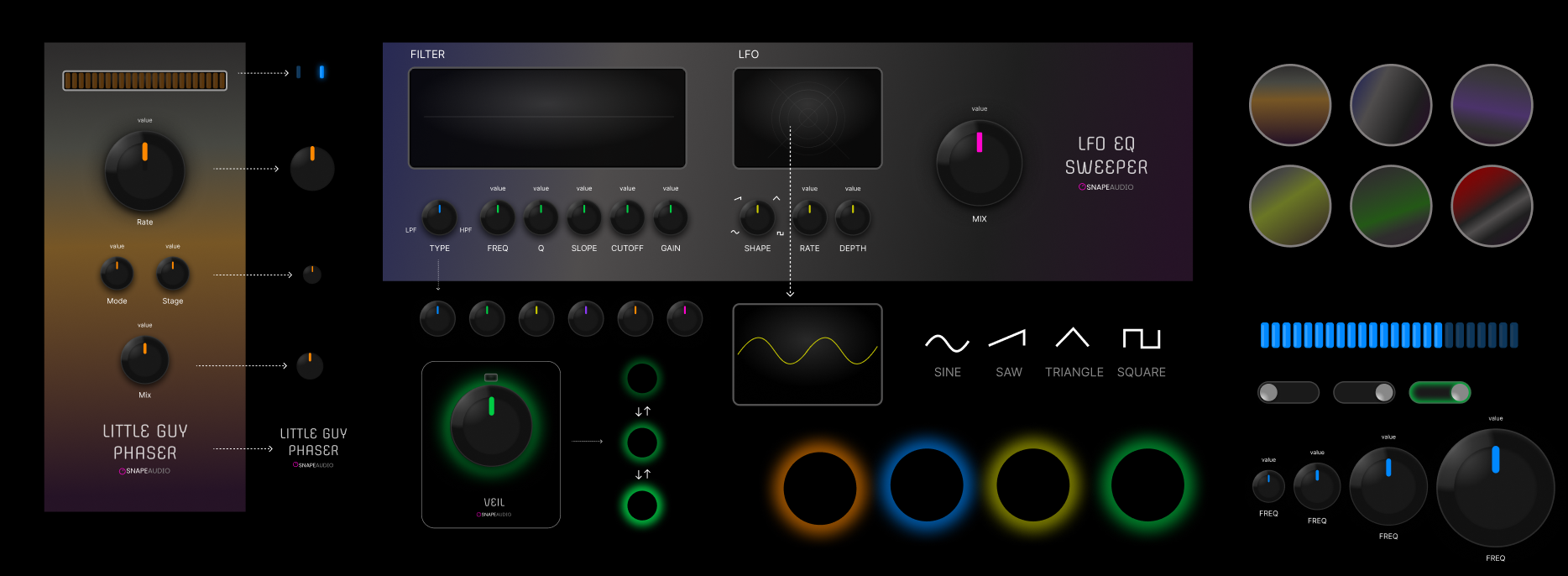
Every plugin needed to feel like part of the same family while serving different functions. I developed a design system with consistent components: dark gradient backgrounds (green-to-purple fade), tick-mark knob system with baked-in bodies rotated by JUCE, 24-segment LED meters for visual feedback, and live waveform displays. The Little Guy series uses a compact 240×559px portrait format, while Full-Size plugins get more screen real estate for advanced visualizations.
Building production audio plugins means solving problems that don't show up in tutorials. AU stability issues caused crashes in GarageBand after 15 seconds — the fix required pre-allocating audio buffers to avoid heap allocation on the audio thread and implementing thread-safe playhead access. Knob tick marks needed precise positioning — Figma components include label text in total height, but JUCE setBounds must match exact knob body dimensions. Every parameter needs versioned ParameterIDs or Logic/GarageBand throws assertion failures. These details don't show up in the marketing, but they're what separates hobby projects from professional tools. Building brand identity from scratch
The brand needed to work across contexts — website headers, Instagram profile pics, plugin splash screens, and favicons. I designed 10 logo variations: bold monogram "S" with waveform pattern, minimal wordmark for headers, rounded badge for app icons, animated plugin knob logo, and professional horizontal lockup. The color system uses distinctive pink (#FF04CD) and green (#00CC44) against pure black backgrounds — bold enough to stand out in a crowded market.
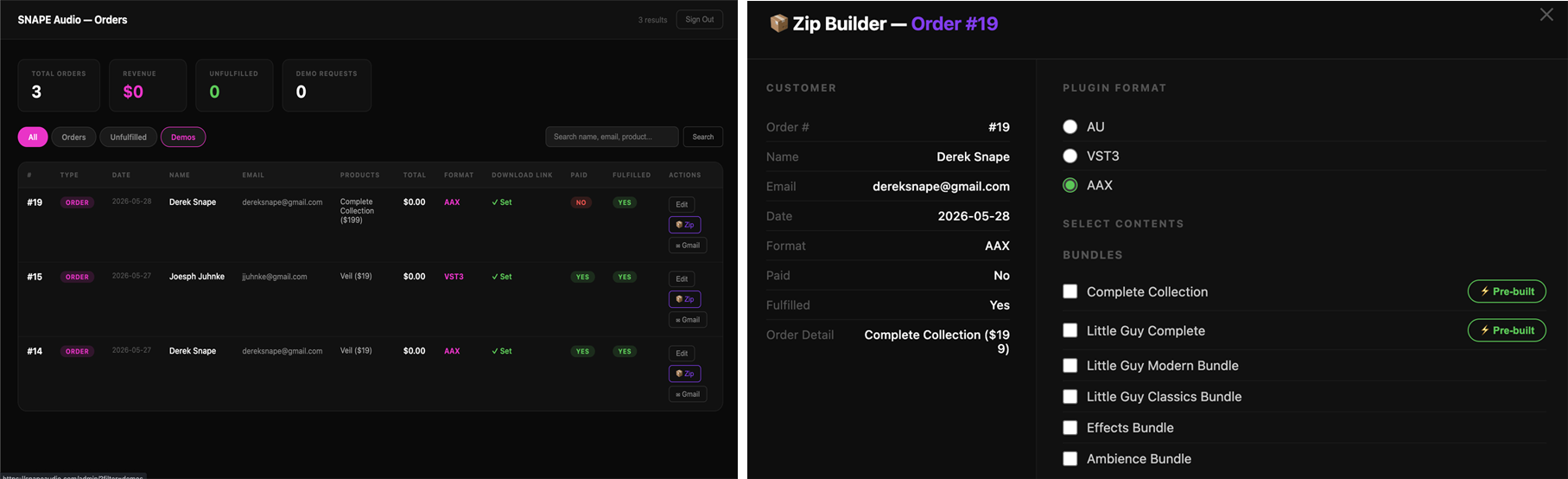
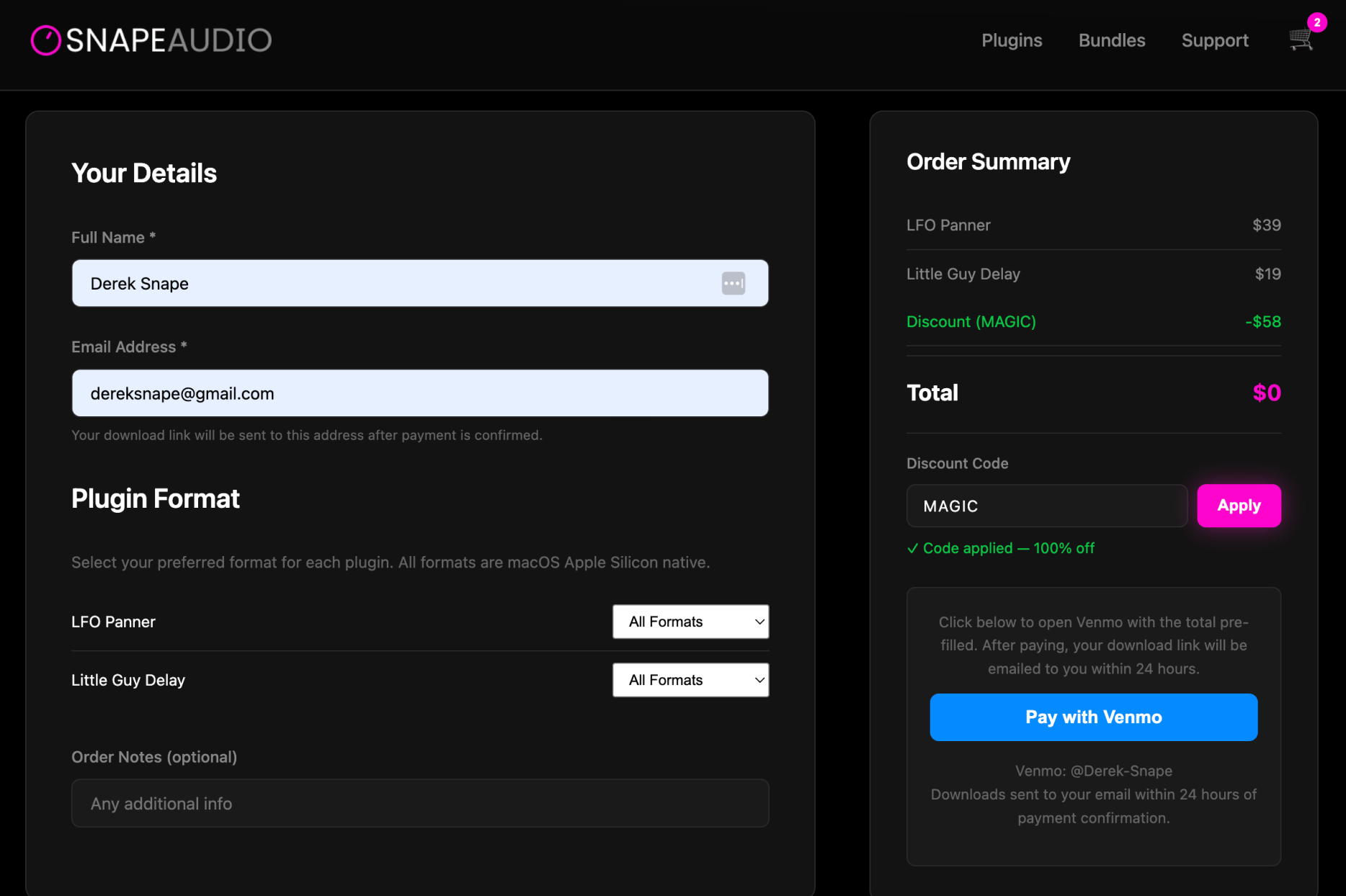 Dynamic low-touch fulfillment engine
 Complete go-to-market strategy
Beyond the product itself, I built the complete infrastructure to actually sell it: a full e-commerce website with product showcase, bundle comparison, support documentation, and legal compliance (EULA, Privacy Policy, Refund Policy adhering to GDPR/CCPA). The 4-week launch plan includes beta testing timeline, Instagram content strategy, forum outreach, and email sequences. Product development is only half the battle — getting it in front of customers is the other half. What this demonstrates
This project shows end-to-end product thinking — not just execution, but strategy. Finding market gaps, designing product architecture that makes business sense, using AI to accelerate without losing quality, building for real-world technical constraints, and creating complete go-to-market infrastructure. It's the difference between building a demo and building a business.